

How to Match Your Watch to Your Outfit: A Style Expert's Guide
You spent real money on a beautiful watch. Then you catch your reflection on the way out the door and something is off. The black rubber strap fights the brown loafers. The bold steel sports piece looks marooned against a charcoal suit. The watch is gorgeous on its own, and wrong on your wrist right now. That small dissonance is the difference between an outfit that looks assembled and one that looks accidental, and it is completely fixable once you understand how a watch talks to everything else you are wearing.
Here is the truth about learning how to match your watch to your outfit: it is not about memorizing a rulebook. It is about reading three signals correctly, formality, color, and metal tone, and letting your watch answer them. Get those right and your wrist stops being an afterthought. It becomes the finishing detail people notice without quite knowing why.
How to Match Your Watch to Your Outfit: The Three-Signal Method
Match your watch to your outfit by aligning three things: formality (a dress watch for tailoring, a sport watch for casual wear), color (coordinate the strap and dial with what you are wearing), and metal tone (keep the case, buckle, and jewelry in the same family). Nail those three and the rest follows.
Think of it as a quick pre-exit check rather than a science. Before you leave, glance down and ask three fast questions. Is this watch as dressy as my clothes? Does the strap and dial belong in this color story? Does the metal agree with my other hardware? If all three land, you are done. The reason this works is that clashes almost always come from one signal being out of step, a sporty diver on a wedding suit, a black strap over brown shoes, a gold case fighting silver jewelry. Fix the odd one out and the whole look settles.
Dress Watch vs Casual Outfit: Let Formality Lead
The single most important rule is that the formality of your watch should match the formality of your clothes. A slim dress watch belongs with tailoring and eveningwear. A rugged sport, field, or dive watch belongs with denim, knits, and weekend layers. When those levels agree, everything else becomes easier.
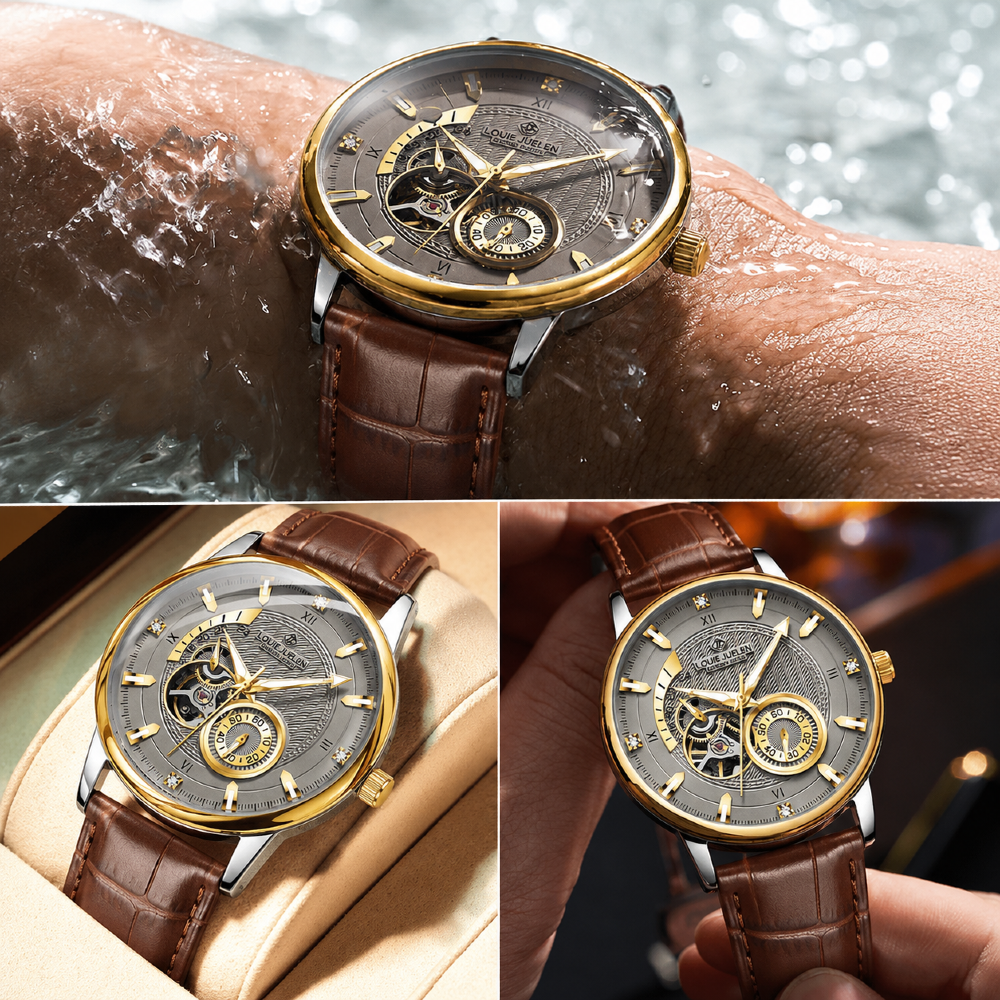
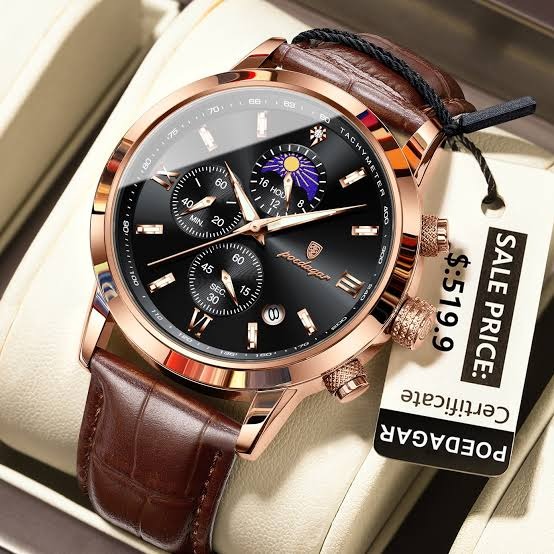
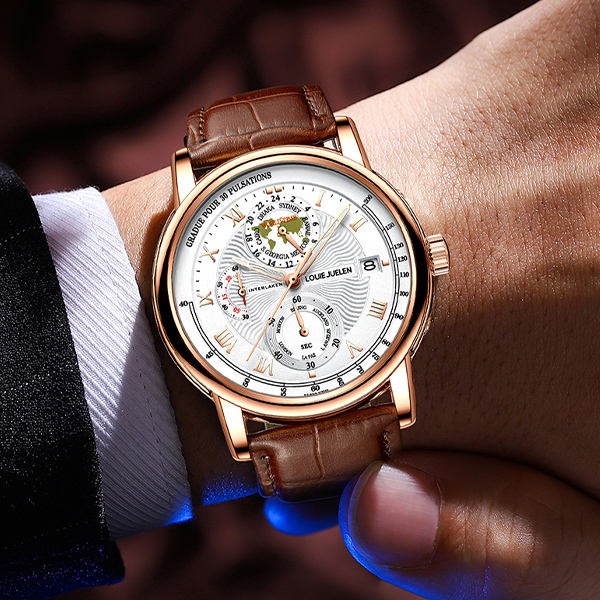
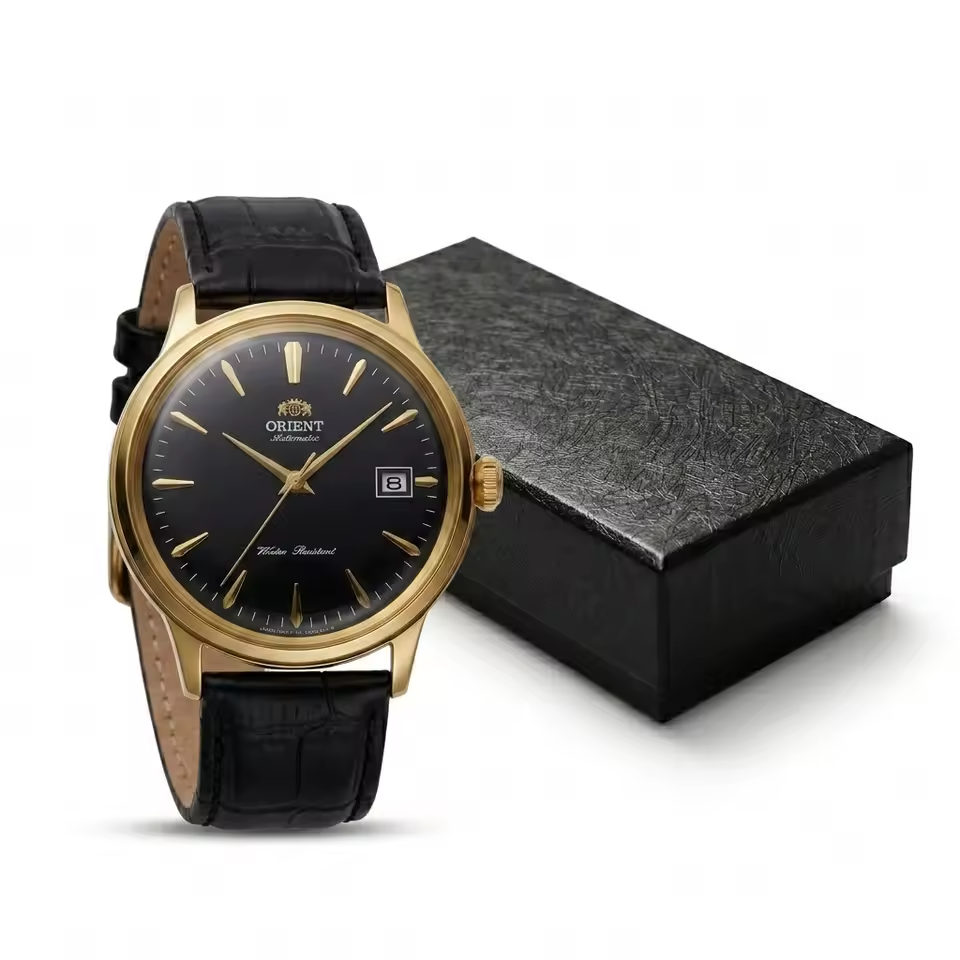
Dress watches are built for elegance. They run thin, sit flat under a shirt cuff, and keep the dial clean and uncluttered, usually on a leather strap or a refined precious-metal bracelet. That restraint is exactly why they work in boardrooms, at weddings, and at fine dining, where a watch should whisper rather than shout. Sport watches are built for function instead, with water resistance, luminous hands, rotating bezels, and durable bracelets. They read as capable and relaxed, which is precisely what jeans and a T-shirt want.
The mistake to avoid is mixing the extremes. A chunky dive watch under a tuxedo cuff looks like it wandered in from another day, and a delicate gold dress watch on a hiking trip looks fragile and out of place. Most people are best served owning both types, because no single watch truly excels in a black-tie room and at the gym. When you are dressing up, reach for the dress piece. When you are dressing down, let the sport watch do its job.
Watch Strap Color Rules: Match Your Watch to Belt and Shoes
To match your watch to your belt and shoes, treat a leather strap like a third piece of leather in the outfit. Start by matching your belt to your shoes, then bring the strap into the same color family. Black strap with black leather, brown strap with brown leather, tone for tone.
Your strap does not need to be an exact color-match, it needs to be in the same tonal family. A medium-brown strap sits happily beside tan or chestnut shoes without being identical. What breaks the look is crossing families, a black strap over brown shoes and a brown belt, because leather colors that do not belong together read instantly as a mismatch. This is where a strong watch quietly undermines an otherwise sharp outfit.
Metal bracelets play by looser rules, which is part of why they are so versatile. A steel watch works with either black or brown footwear. Even so, tone still matters: silver and steel lean cool and pair best with black, grey, and blue clothing, while gold leans warm and flatters browns, tans, beige, and earth tones. And keep in mind these are conventions built around leather dress shoes. Wearing canvas sneakers or a nylon NATO strap on a field watch? The leather-matching rule relaxes, because a working watch and casual shoes are speaking the same language already.
Metal Tone Jewelry Matching: Case, Buckle, and Bracelet
For metal tone jewelry matching, match your watch case to your other visible hardware, silver with silver, gold with gold. Your belt buckle, cufflinks, tie bar, rings, and bracelets should generally share the watch's metal family so the eye reads one coherent finish rather than competing shines.
That said, the strict single-metal rule has loosened. Deliberate mixing is now a genuine style choice rather than a mistake, and a large share of younger wearers mix metals on purpose for self-expression. The key word is deliberate. Cool-toned steel or white gold can pair beautifully with warm yellow or rose gold when the contrast looks intentional. What reads as an accident is an unplanned mismatch, or clashing finishes, like a matte watch beside a high-gloss bracelet. Either unify the finish, both polished or both brushed, or contrast it with purpose.
One place the old rule still holds firmly: formal dressing. For black tie, social expectation still wants your cufflinks, watch, belt buckle, and any visible jewelry to share the same metal tone. Save the adventurous mixing for casual and business-casual days.
Watch Dial Color Coordination: Reading the Color Story
Coordinate your dial color with your outfit the way you would any accent. Neutral clothing in black, white, grey, or navy accepts virtually any dial or metal, which lets the watch become the accent piece. When your outfit already has color, echo or complement it rather than fight it.
A few dial colors are worth knowing by heart:
- Black dial: the safest, most versatile choice. It blends with nearly every color and every level of formality, which is why it is the classic first watch.
- Navy dial: one of the most formally correct colors, used across prestige dress watches. It sits perfectly with grey, charcoal, navy, and cream. A navy dial with a light-blue shirt and a navy blazer is an almost foolproof combination.
- White or silver dial: clean and flexible, it brightens neutrals and reads crisp with business attire.
- Green dial: richer and more expressive. A forest-green dial lifts a navy suit, and picks up green notes in a tie or pocket square without looking loud.
The underlying idea is color harmony. Dials and straps that sit near your outfit's colors on the color wheel, blues, teals, and greens together, look intentional and calm. Save the high-contrast pops for when you genuinely want the watch to be the statement.
Quick-Reference: Match Your Watch to the Occasion
Use this table as a fast styling cheat sheet. It pairs common dress codes with the watch style, ideal strap, and metal that will read correctly every time.
| Occasion / Outfit | Watch Style | Best Strap | Ideal Case Size | Metal & Dial Notes |
|---|---|---|---|---|
| Black tie / formal | Slim dress watch | Black flat calfskin leather | 36–40mm | Match all metals; navy or white dial |
| Business suit | Classic dress watch | Black or dark-brown leather, or polished steel | 36–42mm | Case matches belt buckle and cufflinks |
| Business casual | Chrono, pilot, or field watch | Brown leather or steel | 38–42mm | Black or navy dial for flexibility |
| Smart casual / weekend | Field or everyday sport watch | Brown leather or NATO | 38–42mm | Warm tones with brown leather |
| Active / casual | Dive or sport watch | Rubber, steel, or nylon | 40–44mm | Leather-matching rule relaxes |
What Watch to Wear With a Suit
For a suit, wear a refined watch with a slim case between roughly 36mm and 42mm, a simple dial, and a thin leather or polished-steel strap. Anything much larger starts to look casual, and a cleaner design always ties in better with tailoring than a busy, thick sports piece.
Strap color follows the outfit. Black leather is the most formal and correct choice for black tie, while dark brown, black, or polished steel all read as executive for business suits. Deep navy leather is a quietly stylish alternative that still looks sophisticated. Then coordinate the hardware, if your belt and shoes are brown, a brown strap pulls the whole look together, and your case should agree with your belt buckle, cufflinks, or wedding band in metal tone. Keep the strap on the thinner side so it slips under a shirt cuff and complements the suit instead of stealing from it.
Frequently Asked Questions
Does my watch strap really have to match my belt and shoes?
For leather straps with dress shoes, yes, keep them in the same color family, black with black, brown with brown, because a crossed color reads as a mistake. The rule relaxes for metal bracelets, which work with either, and for casual footwear like sneakers or a NATO-strapped field watch, where the leather-matching convention no longer applies.
Can I wear a silver watch with gold jewelry?
Yes, as long as it looks intentional. Modern styling embraces mixed metals, and a cool-toned steel or white-gold watch can pair beautifully with warm gold pieces when the contrast is deliberate and the finishes are considered. The one exception is formal, black-tie dressing, where social expectation still wants every metal, watch, buckle, cufflinks, jewelry, to match.
What color watch goes with everything?
A watch with a black dial on a versatile strap is the closest thing to a go-anywhere piece, because black blends with nearly every color and formality level. Navy dials are a close second and lean slightly dressier. If you want one watch to cover the most ground, start with a clean black or navy dial in a moderate case size.
What size watch works best with a suit or dress outfit?
A case size in the roughly 36mm to 42mm range is the sweet spot for suits and dress outfits. It sits comfortably under a shirt cuff and looks proportionate on most wrists. Larger cases start to feel sporty and casual against tailoring, while very small cases can get lost, so a slim mid-size dress watch is the safest formal choice.
Once you own a clean dress watch and a capable sport watch, matching stops being a decision and becomes instinct. You will reach for the right one without thinking, and your wrist becomes one more thing you never have to worry about before walking out the door.