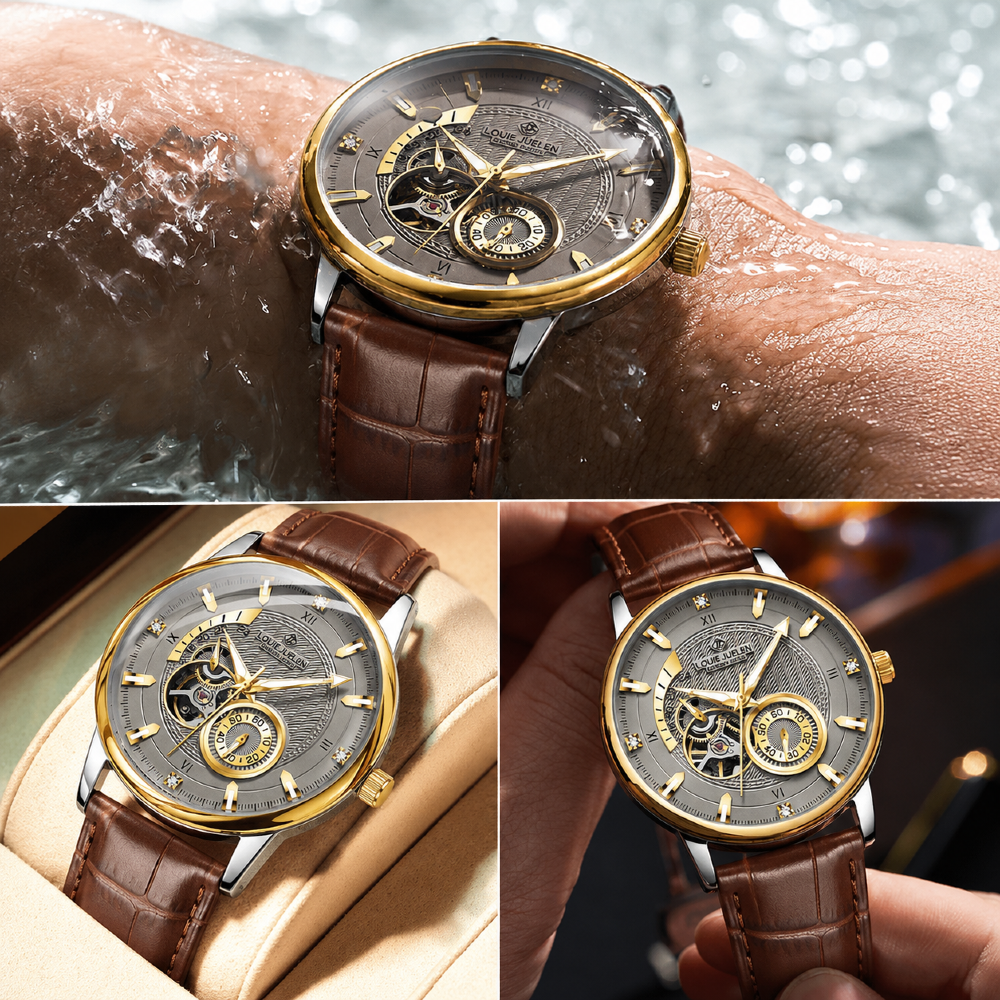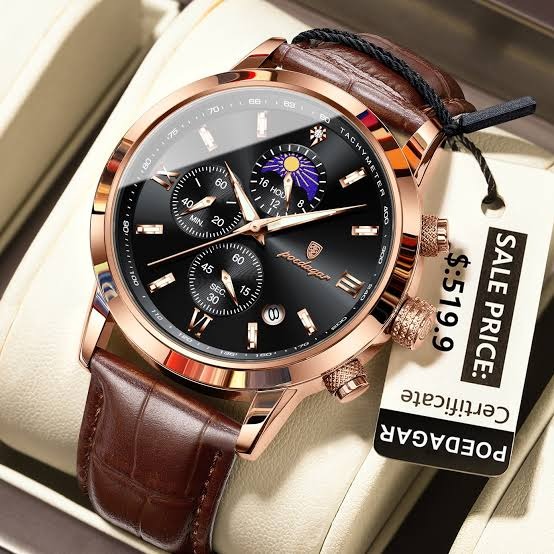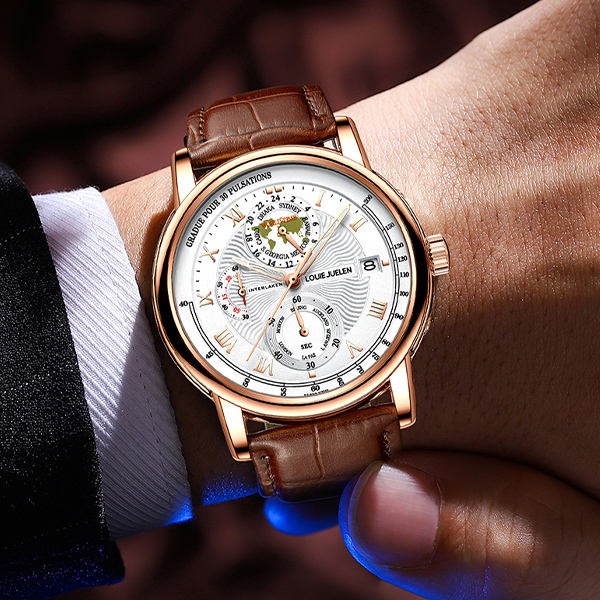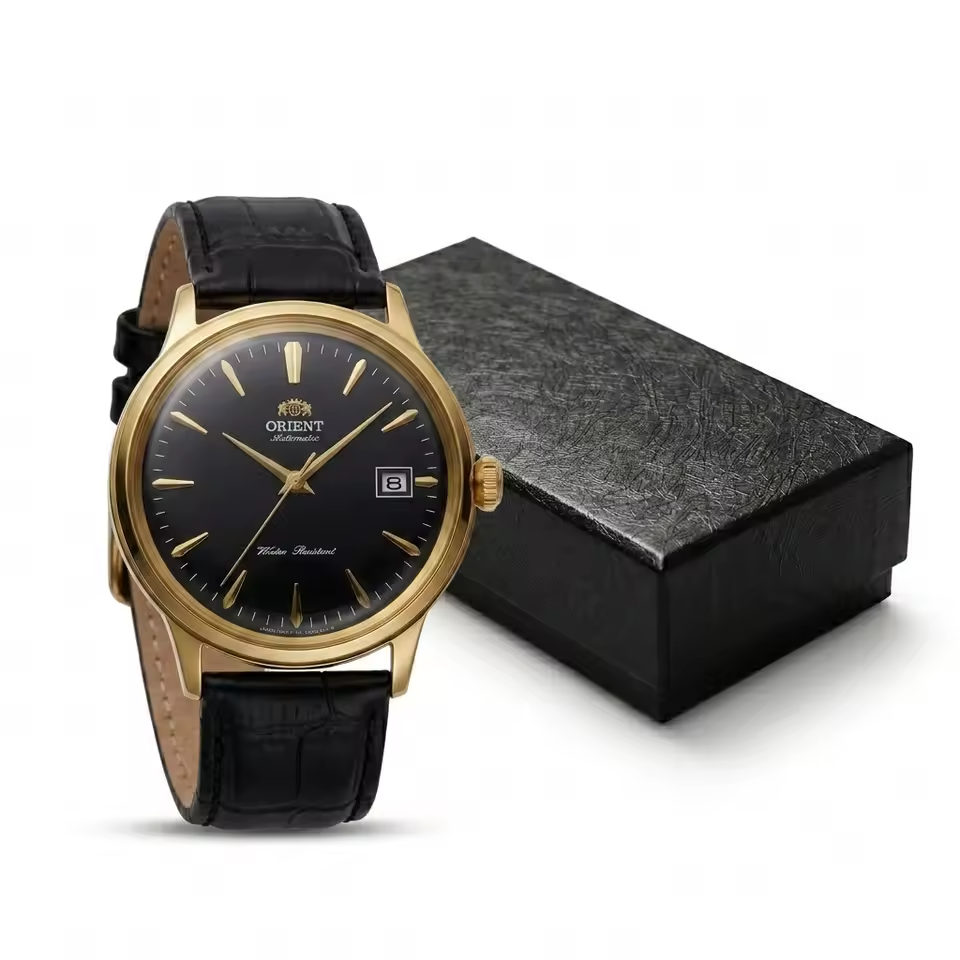


Anatomy of a Watch: Bezel, Lugs, Crown and Complications Explained
You pick up a watch you love, glance at the spec sheet, and suddenly you are reading a foreign language. Unidirectional bezel. Screw-down crown. Applied indices. Exhibition caseback. Small-seconds subdial at six. The timepiece is beautiful, but the vocabulary shuts you out, and it is hard to spend confidently on something you cannot fully describe.
This guide fixes that. We are going to walk around a watch the way a watchmaker would, naming every external part you can see and touch, explaining what each one does, and translating the jargon into plain language. By the end, a spec sheet will read like a story about how a watch was built and what it can do, and you will know exactly what you are paying for.
What Is the Anatomy of a Watch?
The anatomy of a watch is the set of physical parts that make up a timepiece, grouped into the case that houses everything, the components you read (dial, hands, crystal), the components you operate (crown, pushers, bezel), the parts that connect it to your wrist (lugs, strap), and the movement inside that drives it. Learn these, and every watch makes sense.
Think of it in four families. There is the structure that protects the mechanics. There is the reading surface you look at dozens of times a day. There are the controls you turn and press. And there are the connection points that hold the watch to you. We will take them in the order your eye naturally travels, from the outside in.
The Case: The Body That Holds Everything
The case is the main body of the watch, the metal shell that houses the dial, the movement, the crown, and the hands while protecting them from dust, moisture, and knocks. Cases are typically made from stainless steel, titanium, gold, or ceramic, and their shape, thickness, and finishing set the entire character of a timepiece before you read a single number.
The case has its own internal geography. The case middle, sometimes called the caseband, is the central ring that forms the sides. The caseback seals the rear. The whole structure carries a size, usually quoted as case diameter in millimeters, and it is worth remembering that thickness and lug-to-lug length affect how a watch wears far more than diameter alone.
The Caseback: The Door to the Movement
The caseback is the panel that closes the rear of the case and serves as the main access point to the movement for watchmakers. It may be a solid metal disc, often engraved with a model name, serial number, or water-resistance rating, or it may be a clear sapphire "exhibition" caseback that lets you watch the movement turning inside.
Casebacks attach in three common ways: snap-on (press-fit), screw-down (threaded into the case for a better seal), and screw-in with tiny screws around the edge. A screw-down or gasketed caseback is part of what keeps water out, which is why servicing usually means resealing this area.
The Crystal: The Window Over the Dial
The crystal is the transparent cover that sits over the dial, protecting it while letting you read the time, and the material it is made from is one of the clearest signals of a watch's quality tier. The three common types are sapphire, mineral, and acrylic, and each behaves differently when it meets a scratch, a drop, or bright sunlight.
- Sapphire crystal is the luxury standard, a synthetic material grown from crystallized aluminum oxide. It is extremely scratch resistant and clear, though its hardness makes it more brittle under a sharp, direct impact. Better examples carry an anti-reflective coating to cut glare.
- Mineral crystal is tempered glass, a practical middle ground that resists scratches better than plastic at a friendlier price.
- Acrylic crystal, also called Hesalite or Plexiglass, is a hardened plastic used widely in mid-century watches. It is light and remarkably impact resistant, and its scratches can often be polished out at home.
Shape matters too. A flat crystal reads clean and modern, while a domed or "box" crystal adds vintage warmth and softens reflections at the edges.
The Bezel: More Than a Frame
The bezel is the ring that surrounds the crystal and sits on the top edge of the case, and while it can be purely decorative, on tool watches it becomes an instrument you actively use to measure elapsed time, track a second time zone, or calculate speed. Whether it turns, and in which direction, tells you what a watch was built to do.
What Is a Bezel Used For?
A bezel converts the ring around the dial into a timer, a second-time-zone tracker, or a speed calculator, depending on the scale printed on it and whether it rotates. Fixed bezels hold the crystal and add style. Rotating bezels add a function you can operate with a fingertip, which is why divers, pilots, and racers rely on them.
Here are the workhorse bezel types:
- Dive (unidirectional) bezel: Turns in only one direction, usually counterclockwise. Line the marker up with the minute hand at the start of a dive, and you read elapsed time at a glance. The one-way design is a safety feature: a knock can only shorten the time shown, never trick a diver into thinking they have more air than they do.
- GMT (bidirectional) bezel: Carries a 24-hour scale and works with a dedicated GMT hand to track a second or third time zone. It rotates both ways so you can quickly jump forward or back without spinning all the way around.
- Tachymeter bezel: A fixed scale used with a chronograph to measure speed over a known distance. It does not rotate, because the calculation depends on the scale staying put.
The Dial: The Face You Read
The dial, often called the face, is the flat surface beneath the crystal that carries the hour markers, any text or logos, subdials, and windows, and it is the single biggest driver of a watch's personality. Colors, textures, and finishing here separate a quiet dress watch from a loud sports piece at a single glance.
The markers that indicate the hours are called indices or hour markers. They may be printed on, or they may be "applied," meaning separate metal pieces attached by hand, which catch light and signal higher-end construction. A small window showing the date is an aperture, and a small inset dial for running seconds or chronograph counters is a subdial or register.
The Hands: Pointing the Way
The hands are the moving pointers mounted at the center of the dial that indicate hours, minutes, and often seconds, and their shape is part of a watch's design language. Common styles include sword, dauphine, baton, and the luminous "Mercedes" and "snowflake" hands found on many dive watches, frequently filled with lume that glows in low light.
The Crown: Your Main Point of Control
The crown is the small knurled knob on the side of the case, usually at three o'clock, and it is the control you interact with most, used to wind the watch, set the time, and adjust the date. It clicks out to different positions, and each position hands the crown a different job.
How the Crown Works
Pushed all the way in, the crown sits in its home position, where many mechanical watches let you wind the mainspring. Pull it out one click, and you typically set the date or day. Pull it out to the final click, and you set the time, which usually stops the seconds hand so you can synchronize precisely.
A screw-down crown adds a threaded collar that locks against the case for a tighter seal, which is why it is standard on dive and tool watches. You unscrew it counterclockwise before use and screw it back down afterward, and setting time with a screw-down crown left open is a common cause of water getting in.
The Pushers: Commands for the Chronograph
Pushers are the separate buttons flanking the crown, most often at two and four o'clock, and they operate a chronograph, the stopwatch function built into some watches. The top pusher usually starts and stops the timing, and the bottom pusher resets it to zero.
One rule protects them: pushers are meant to be pressed, not turned. Twisting a pusher can loosen it and lead to a repair, so use a straight, deliberate push.
The Lugs: Where the Watch Meets Your Wrist
The lugs, sometimes called horns, are the four protrusions extending from the top and bottom of the case that hold the strap or bracelet in place. A spring bar runs between each pair of lugs to secure the strap, and the gap between them, the lug width in millimeters, tells you which straps will fit.
Lugs quietly decide comfort. The lug-to-lug distance, measured from the tip of one lug to the tip of the opposite pair, determines how much of your wrist the watch covers. Long lugs on a small wrist can make a modest case overhang uncomfortably, which is why seasoned buyers check lug-to-lug before diameter.
Quick-Reference Parts of a Watch Glossary
Keep this table handy the next time you read a spec sheet. It maps each part to what it does in one line.
| Watch Part | What It Is | What It Does |
|---|---|---|
| Case | The metal body of the watch | Houses and protects the movement and dial |
| Caseback | The rear panel of the case | Seals the case; may be solid or exhibition sapphire |
| Crystal | Transparent cover over the dial | Protects the dial (sapphire, mineral, or acrylic) |
| Bezel | Ring around the crystal | Frames the dial; may time, track zones, or measure speed |
| Dial | The face of the watch | Carries markers, hands, subdials, and date window |
| Indices | Hour markers on the dial | Mark the hours; printed or applied |
| Hands | Central pointers | Indicate hours, minutes, and seconds |
| Crown | Knob on the case side | Winds, sets time, and adjusts the date |
| Pushers | Buttons beside the crown | Start, stop, and reset the chronograph |
| Lugs | Protrusions from the case | Attach the strap or bracelet via spring bars |
| Movement | Mechanism inside | Powers the watch (mechanical or quartz) |
The Movement: The Engine You Rarely See
The movement is the mechanism inside the case that keeps time and drives the hands, and it comes in two broad families: mechanical, powered by a wound mainspring, and quartz, powered by a battery and a vibrating quartz crystal. Everything else on this list exists to protect, display, or control what the movement is doing.
Mechanical movements split further into manual, which you wind by hand through the crown, and automatic (self-winding), which winds itself using a rotor that spins with the motion of your wrist. Quartz movements are prized for accuracy and low maintenance, while mechanical movements are prized for craftsmanship and that sweeping seconds hand.
Watch Complications Explained
A complication is any function a watch performs beyond telling the basic time of hours, minutes, and seconds, from a simple date window to a self-adjusting perpetual calendar. Complications are where watchmaking shows off, and knowing the common ones tells you what a watch can actually do for you day to day.
- Date: The most common complication, showing the date in a window, on a subdial, or with a pointer hand.
- Chronograph: A built-in stopwatch, operated by the pushers and read on subdials that count elapsed seconds, minutes, and hours.
- GMT / dual time: An extra hand and 24-hour scale that track a second time zone, ideal for travelers.
- Moonphase: A small display showing the current phase of the moon, from new to full, a feature originally useful for tracking tides.
- Perpetual calendar: A calendar that automatically accounts for months of different lengths and leap years, correctly displaying the date for decades without adjustment.
- Tourbillon: A rotating cage holding the escapement and balance wheel, devised by Abraham-Louis Breguet in 1795 to average out the effect of gravity on accuracy. Today it is as much a showcase of skill as a practical aid.
Once you can name the parts, choosing a watch becomes a conversation about what you want rather than a guessing game. You will know whether that rotating bezel earns its keep, why a sapphire crystal is worth the premium, and how lug-to-lug length will feel on your wrist before it arrives.
Frequently Asked Questions
What are the main external parts of a watch called?
The main external parts of a watch are the case (the body), the crystal (the clear cover), the dial (the face), the hands, the bezel (the ring around the crystal), the crown (the winding knob), the pushers (chronograph buttons), the lugs (which hold the strap), and the caseback. The movement sits inside and powers everything.
What is the difference between a bezel and a crown on a watch?
The bezel is the ring surrounding the crystal on the top face of the watch, and depending on its type it can frame the dial, time a dive, or measure speed. The crown is the small knob on the side of the case that you pull out and turn to wind the watch, set the time, and adjust the date. One sits on top; the other sits on the side.
Why does my dive watch bezel only turn one way?
A dive bezel turns in only one direction, usually counterclockwise, as a built-in safety measure. If the bezel is bumped and rotates accidentally during a dive, the one-way design can only make the displayed elapsed time appear longer, never shorter, so a diver is never misled into believing they have more air or bottom time remaining than they truly do.
What does it mean when a watch has a screw-down crown?
A screw-down crown has a threaded collar that locks the crown firmly against the case, creating a tighter seal against water. You unscrew it counterclockwise to wind or set the watch, then screw it back down to secure it. It is standard on dive and tool watches, and keeping it screwed down is essential to maintaining the stated water resistance.